 admin
admin You've carefully placed your snake plant cuttings in water or soil, patiently waiting for new roots and shoots to appear. But weeks pass, and progress seems agonizingly slow, or worse, non-existent. The culprit is often insufficient light. While snake plants are famed for tolerating low light, their cuttings—vulnerable and resource-depleted—have a critical, non-negotiable need for adequate energy to spark new growth. Simply placing them in a dim corner won't cut it. This guide will demystify how to supplement light for snake plant cuttings to accelerate growth, transforming your propagation patience into visible, thriving results.
Why Light is the Non-Negotiable Catalyst for Propagation
Propagation is an energy-intensive process. A leaf cutting has been severed from its main energy source—the mother plant's root system. It must now perform the miraculous tasks of cell division, root initiation, and shoot development using only its stored reserves and what it can produce through photosynthesis. In low light, photosynthesis slows to a crawl, draining the cutting's reserves without replenishing them. This often leads to rot, failure, or a stunted, weak plantlet. Supplemental lighting provides the consistent, optimal spectrum and intensity needed to fuel this metabolic engine, turning a waiting game into a growth sprint.
Understanding Light: The Metrics That Matter for Cuttings
Before adding any light, it's crucial to understand what your cuttings need. Not all light is created equal.

Light Intensity (PPFD): This measures the number of photosynthetically active photons hitting the surface per second. Cuttings need moderate intensity—enough to drive growth without causing stress or bleaching. A target range of 50-150 µmol/m²/s is ideal for snake plant propagation.
Light Duration (Photoperiod): Consistency is key. While mature snake plants adapt to various cycles, cuttings benefit from a long, stable photoperiod of 12-16 hours of light followed by 8-12 hours of darkness. This mimics long summer days, signaling the plant to grow.
Light Spectrum: Plants use primarily blue and red light for photosynthesis and development. Blue light promotes strong root development and compact growth, while red light encourages cell elongation and shoot growth. A balanced full-spectrum light or one slightly richer in blue is perfect for the root-focused stage of propagation.
Choosing the Right Supplemental Light Source
The market is flooded with options. Here’s a breakdown tailored for the home propagator.
LED Grow Lights: The Top Choice Modern LED panels are the most efficient and effective solution. They produce minimal heat, allowing you to place them close to the cuttings without risk of scorching, and their spectrum can be finely tuned.
- Full-Spectrum White LEDs: These mimic natural sunlight, are pleasant to look at, and provide a balanced spectrum. They are excellent for all growth stages.
- Blurple (Blue/Red) LEDs: While efficient, the purple glow can be harsh. They are effective but less versatile if the space is also a living area.
Fluorescent Lights: The Reliable Classic T5 or T8 fluorescent tubes are a cost-effective and proven option.
- Pros: They provide a good, diffuse light spectrum suitable for cuttings and are relatively inexpensive to purchase.
- Cons: They are less energy-efficient than LEDs, produce more heat, and have a shorter lifespan.
Incandescent/Halogen: What to Avoid Standard household bulbs are terrible for plant growth. They emit mostly yellow/green light (which plants reflect) and far too much heat, which can easily cook delicate cuttings. Avoid them entirely.
A Practical Tip: When shopping, look for lights labeled for "seed starting" or "propagation." These are typically calibrated for the lower intensity needs of young plants and cuttings.
Your Step-by-Step Setup for Accelerated Growth
Follow this actionable plan to implement your lighting system effectively.
1. Assess and Position Your Cuttings Gather all your cuttings in one designated propagation area. This could be a shelf, a table, or a dedicated corner. Ensure the space has access to power and is away from cold drafts or excessive heat.
2. Install and Position the Lights Mount your chosen light fixture above the cuttings. The correct distance is critical:
- LEDs: Start with the light 6 to 12 inches above the cuttings.
- Fluorescents: Position them 4 to 6 inches above. Leaves should feel barely warm to the touch after several hours. If they feel hot, raise the light. If growth seems leggy or slow, lower it slightly.
3. Implement a Consistent Timer Manual switching leads to inconsistent photoperiods. Plug your light into a simple, inexpensive digital timer. Set it for a 14-hour on/10-hour off cycle. This automation guarantees your cuttings receive uninterrupted, daily light "meals" without you having to remember.
4. Monitor and Rotate for Even Growth Check on your cuttings every few days. Gently feel the soil or water temperature. Observe the color of the cuttings—vibrant green is good; pale or yellowing may signal too much light. Rotate the pots or containers weekly to ensure all sides receive equal light, preventing lopsided growth.
Optimizing the Entire Propagation Environment
Light works in concert with other factors. Ignoring these can nullify your lighting efforts.
Temperature: Snake plant cuttings root best in warm conditions, between 70°F and 80°F (21°C - 27°C). Cooler temperatures drastically slow root development. A seedling heat mat placed under your propagation tray can work wonders in tandem with your lights.
Humidity: While snake plants don't require tropical humidity, maintaining moderate humidity (around 40-50%) reduces moisture loss from the cutting. A clear plastic dome or a loosely placed plastic bag over the cuttings can help, but ensure there is some air circulation to prevent mold.
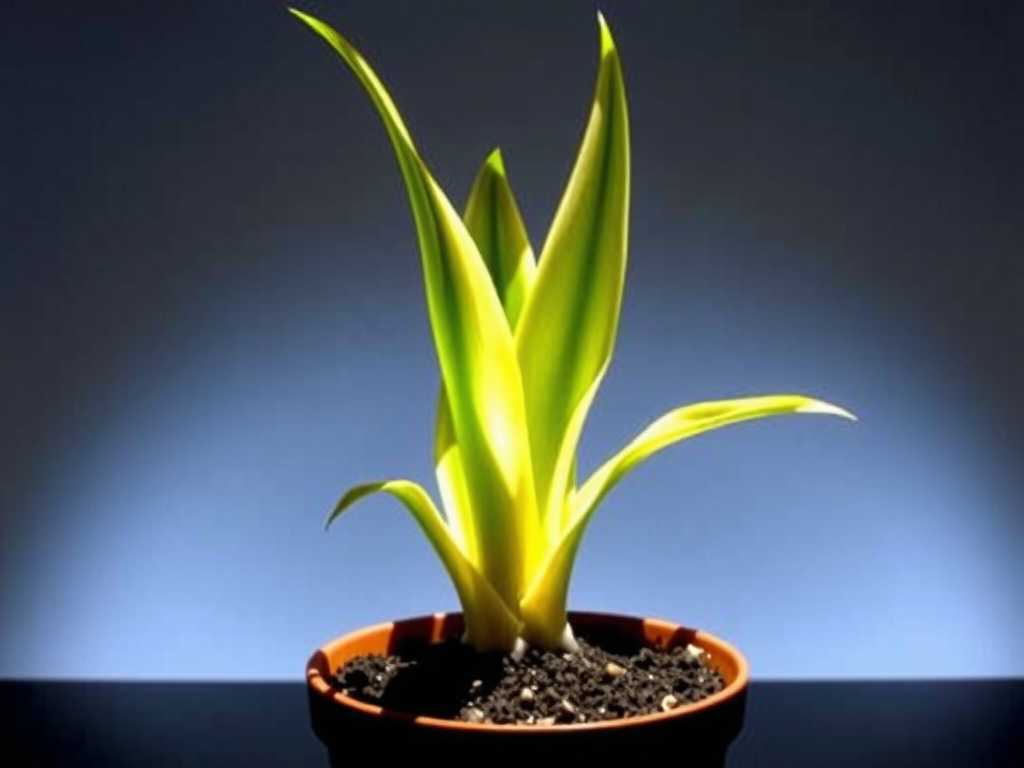
Watering (for soil propagation): The goal is lightly moist, never soggy. Under bright supplemental lights, soil may dry slightly faster. Water only when the top inch of the medium feels dry.
The Patience Factor: Even with perfect light, snake plants are not fast propagators. You may see root nubs in 3-4 weeks, and a new shoot (pup) can take 2-3 months. The light ensures this process is continuous and healthy, not that it happens overnight.
Troubleshooting Common Light-Related Issues
- Cutting Stretching or Leaning: This is etiolation—a clear sign of insufficient light intensity. Move the light closer or invest in a stronger fixture.
- Leaves Turning Pale or Yellow: Often a sign of light burn (too much intensity) or, conversely, a nutrient issue exacerbated by fast growth. First, try moving the light further away.
- No Root Growth After Weeks: Double-check temperature. Cold roots + great light = no progress. Ensure the cutting medium (water or soil) is warm enough.
- Dry, Brown Tips on New Growth: Usually a sign of low humidity in the localized environment under the grow light. Increase ambient humidity slightly.
Frequently Asked Questions
Can I use a regular desk lamp for my snake plant cuttings? You can, but only if it's fitted with a full-spectrum LED bulb designed for plant growth. A standard desk lamp bulb lacks the correct spectrum and intensity to be truly effective and may produce too much heat.
How long should I keep the supplemental lights on each day? Aim for a consistent photoperiod of 12 to 16 hours. Using a timer to provide 14 hours of light followed by 10 hours of darkness is an excellent, hands-free routine that mimics optimal growing conditions.
Once my cutting has rooted and has a new pup, when can I stop using the grow light? You can gradually acclimate the new plant to its permanent home. Once the pup is a couple of inches tall and the root system seems established, begin moving it to its final location over 7-10 days. If that location receives bright, indirect natural light, you may no longer need the supplement. If it's a lower-light spot, you might choose to keep the grow light as a permanent fixture for that plant.
Providing the right light is the most significant intervention you can make to ensure your snake plant cuttings succeed. It transforms the propagation process from a hopeful experiment into a predictable, science-backed practice. By selecting an appropriate light source, setting it up correctly, and managing the supporting elements of temperature and moisture, you create a powerhouse nursery that gives your cuttings the essential energy they crave. Watch as they respond with stronger roots, faster-developing shoots, and the robust vitality that turns a single leaf into a whole new, independent plant.
发表评论