 admin
admin You've carefully propagated your snake plant cuttings, watching over them with anticipation. But weeks have passed, and those promising green shoots still lack the robust root system you were hoping for. The leaves might look healthy, yet the cutting feels unstable in its pot, a clear sign that root development has stalled. This common frustration often stems from one key, yet frequently overlooked, aspect of propagation: strategic fertilization. Knowing how to fertilize snake plant cuttings to promote root development is the crucial bridge between a simple cutting and a thriving, independent plant.
This guide will walk you through the science and practical steps of feeding your sansevieria cuttings. We'll move beyond basic care to focus on the specific nutritional needs that encourage strong, healthy roots, ensuring your propagation efforts lead to lasting success.
Understanding the Rooting Phase: Why Timing is Everything
Before you reach for any fertilizer, it's critical to understand what's happening beneath the soil. A fresh snake plant cutting is in a vulnerable state. Its energy is directed almost entirely toward cellular repair at the cut site and the creation of new root primordia—the tiny bumps that develop into roots. Applying the wrong type of fertilizer, or fertilizing at the wrong time, can overwhelm the cutting, burn delicate new tissues, or promote leaf growth at the expense of root development.
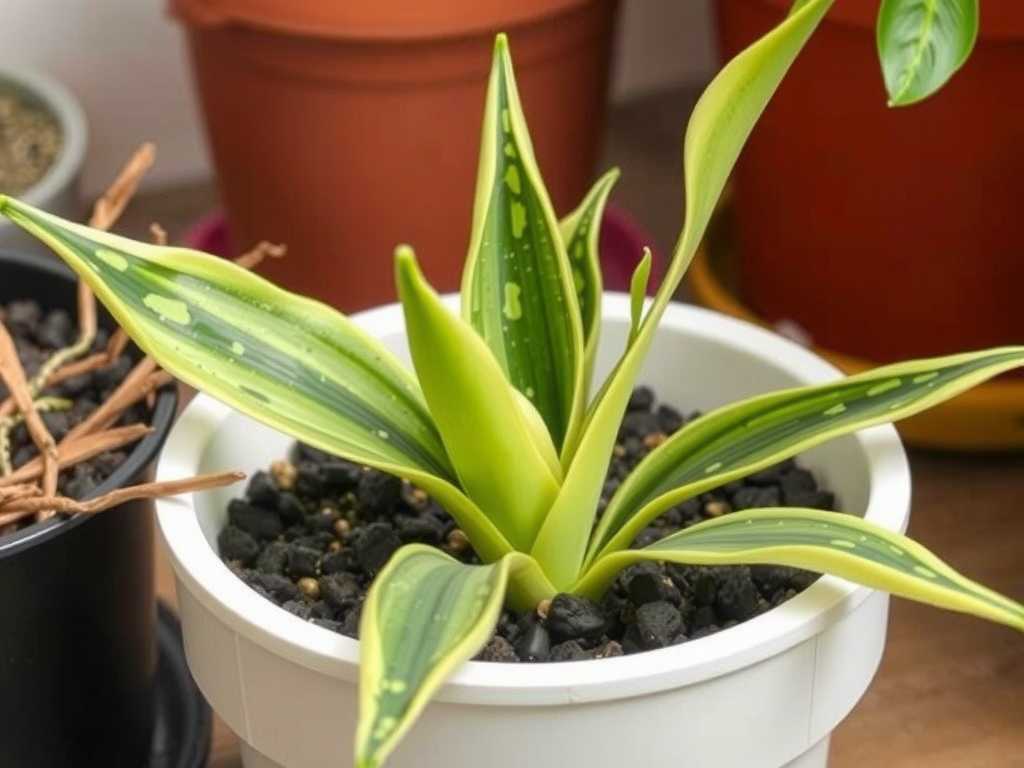
The golden rule is to wait for the first signs of roots. Do not fertilize a cutting that has no roots at all. It has no way to absorb the nutrients, which will then simply accumulate in the growing medium and potentially cause chemical burns. Begin your fertilization protocol only after you see small, white root nubs or initial root growth of about half an inch to an inch in length.
The Ideal Fertilizer Profile for Root Growth
Not all plant foods are created equal, especially for the specialized task of rooting. The three primary macronutrients are Nitrogen (N), Phosphorus (P), and Potassium (K), represented as an N-P-K ratio on fertilizer labels.
- Phosphorus (P) is Key: Phosphorus is directly linked to energy transfer and root system development. A fertilizer with a higher middle number (the P) is beneficial.
- Lower Nitrogen (N): While nitrogen promotes green, leafy growth, too much too early can signal the plant to prioritize leaves over roots.
- Potassium (K) for Health: Potassium supports overall plant vigor, disease resistance, and metabolic functions, which are all important for a establishing cutting.
Therefore, look for a balanced or root-promoting fertilizer. Excellent choices include:
- A balanced, water-soluble formula like 10-10-10 or 5-5-5, used at half strength.
- A fertilizer labeled for "root development" or "transplanting," which often has a formulation like 4-10-3.
- A liquid seaweed or kelp extract. These are rich in micronutrients, enzymes, and natural growth hormones (like auxins) that gently stimulate root growth without risk of burn. They are a fantastic, mild option for sensitive cuttings.
Step-by-Step: How to Fertilize Snake Plant Cuttings for Strong Roots
Follow this structured process to safely and effectively nourish your cuttings.
Step 1: Ensure a Healthy Foundation Your cutting must be planted in a well-draining, sterile potting mix. A blend of 50% succulent/cactus mix and 50% perlite is ideal. This ensures aeration around the potential root zone and prevents waterlogging, which causes rot. A healthy medium is the first prerequisite for successful fertilization.
Step 2: The "Weakly, Weekly" Dilution Principle The mantra for feeding cuttings and young plants is "weakly, weekly." This means using a drastically diluted solution. For any liquid fertilizer, dilute it to one-quarter or half the strength recommended on the label for mature houseplants. This provides a gentle, steady supply of nutrients that the fledgling roots can absorb without stress.
Step 3: Application Method Always apply your diluted fertilizer solution to moist soil. Never fertilize a dry cutting, as this concentrates the salts. Water the cutting lightly with plain water first, or apply the fertilizer solution when the top inch of soil is slightly damp. Pour the solution around the base of the cutting, avoiding direct contact with the leaves if possible.
Step 4: Frequency and Routine Incorporate this diluted feeding into your regular watering schedule during the active growing season (spring and summer). A good routine is: Water once, then the next time you would water, use the diluted fertilizer solution. This might mean fertilizing every 2-4 weeks, depending on your soil's drying time. Completely cease fertilization during the fall and winter when the plant's growth naturally slows.
Common Mistakes to Avoid for Optimal Root Development
Even with good intentions, it's easy to hinder progress. Avoid these pitfalls:
- Fertilizing Too Early: The most common error. Patience is essential. Wait for visible roots.
- Using Full-Strength Fertilizer: This is a major cause of failure. The salts in concentrated fertilizer will desiccate and burn the delicate new root cells.
- Overwatering with Fertilizer: More food is not better. Stick to the diluted, infrequent schedule. Overwatering leads to rot, negating any benefit from the fertilizer.
- Ignoring Light Conditions: Fertilizer is not a substitute for light. Your cutting still requires bright, indirect light to perform photosynthesis and fuel its own growth. Fertilizer merely supplies the building blocks.
Expert Insights on Nutrient Uptake
Horticulturists emphasize that a plant's ability to use fertilizer depends entirely on its environmental conditions. Dr. Linda Chalker-Scott, a well-known urban horticulturist, often notes that "fertilizer is not plant food." Plants create their own food (sugars) through photosynthesis. Fertilizer provides essential minerals. For a cutting, ensuring it has the right light and temperature to photosynthesize is just as important as providing minerals, as the energy from photosynthesis drives root development and nutrient uptake.
Monitoring Progress and Adjusting Care
After beginning your fertilization routine, monitor your cutting closely. Signs of success include:
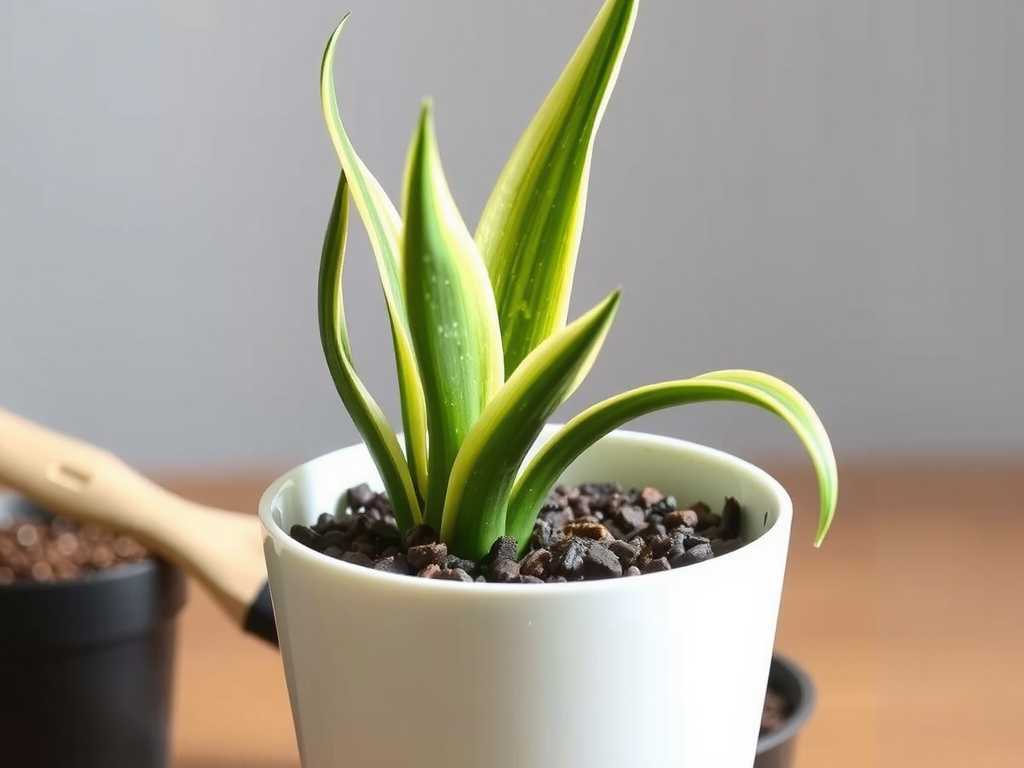
- Increased stability of the cutting in the pot.
- The emergence of new, firm leaf growth from the center (a "pup").
- Visible white or orange roots at the drainage holes (if root-bound gently).
If you notice the leaf tips turning brown or yellowing shortly after feeding, you may be over-fertilizing. Flush the soil with plenty of clean water to leach out excess salts and pause fertilization for a month.
How long does it take for a fertilized snake plant cutting to establish a full root system? Even with optimal care and gentle fertilization, patience is required. It typically takes 2 to 3 months for a snake plant cutting to develop a substantial root system capable of supporting vigorous growth. The process can be slower in low light or cooler temperatures.
Can I use rooting hormone as a fertilizer? No, they serve different purposes. Rooting hormone (often containing auxins) is a powder, gel, or liquid applied to the fresh cut end before planting to stimulate initial root cell formation. Fertilizer provides ongoing nutritional support after those roots have begun to grow. They can be used in sequence but are not interchangeable.
My cutting has roots but isn't producing new leaves. What should I do? This is normal. The plant's priority is to build a sufficient root foundation to sustain future growth. As long as the original cutting and roots look healthy, continue with your gentle care routine. The emergence of a new leaf shoot (or pup) is the final sign that your propagation is fully successful and the plant is shifting energy to upward growth.
Successfully propagating snake plants hinges on supporting the plant's natural rhythms. By waiting for the right moment, choosing a gentle, phosphorus-favoring fertilizer, and adhering to a "weakly, weekly" dilution strategy, you provide the essential nutrients for root development without overwhelming your cutting. Combine this targeted nutritional support with a well-draining medium, bright indirect light, and cautious watering, and you transform the waiting period into a time of active, underground growth. The reward is a deeply rooted, resilient snake plant ready to grow for years to come.

发表评论