 admin
admin How to Control Water Temperature for Hydroponic Snake Plant Cuttings
You’ve carefully chosen a healthy snake plant leaf, made a clean cut, and placed it in a beautiful vase of water, eagerly awaiting new roots. Weeks pass, but instead of robust growth, you’re met with a musy, rotting cutting or stagnant water. The culprit is often overlooked yet critical: improper water temperature. Mastering how to control water temperature for hydroponic snake plant cuttings is the single most important factor between propagation success and failure. This guide will provide you with a complete, step-by-step framework to master this essential variable, ensuring your cuttings develop strong, healthy roots every time.
Why Water Temperature is Non-Negotiable for Propagation
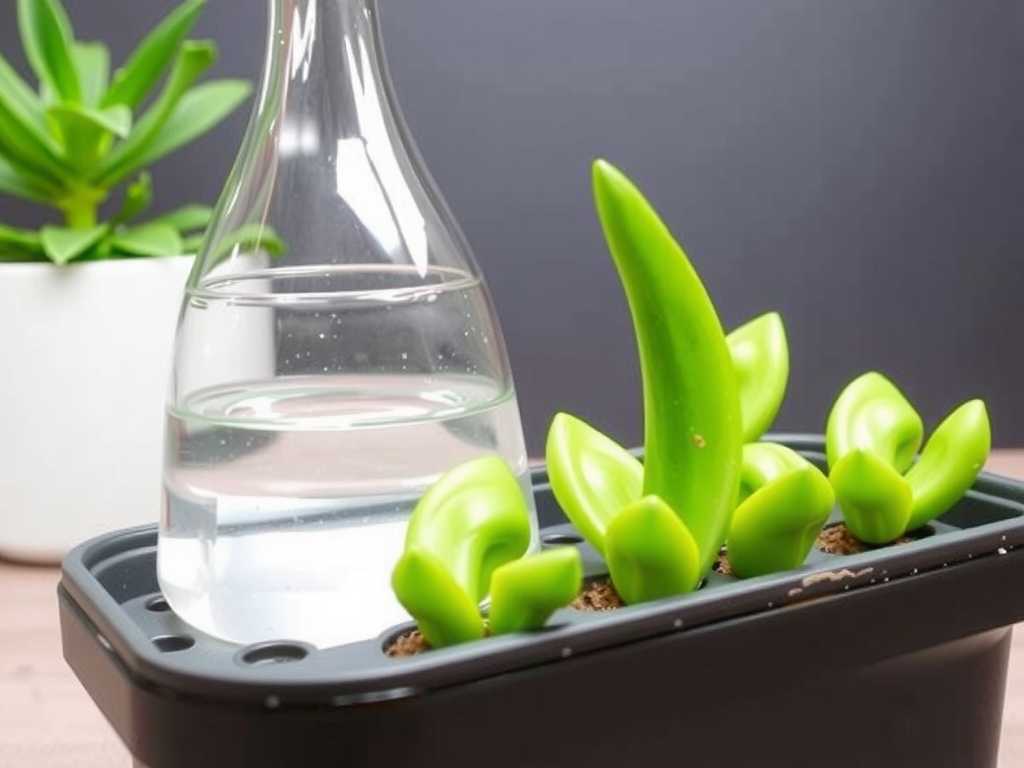
Water is not just a passive medium for your snake plant cuttings; it’s an active environment that governs biological processes. Temperature directly controls the rate of cellular activity, nutrient uptake (even in plain water), and oxygen levels.
When the water is too cold (consistently below 65°F or 18°C), the metabolic processes of the cutting slow to a crawl. Root development stalls, making the cutting vulnerable to rot pathogens that can still operate at lower temperatures. It’s like putting the plant into hibernation without the benefits.
Conversely, water that is too warm (consistently above 80°F or 27°C) creates a dangerous situation. Warm water holds less dissolved oxygen, suffocating the cutting’s tissues. Furthermore, elevated temperatures accelerate bacterial and fungal growth, turning your propagation vessel into a breeding ground for rot. The delicate callus tissue forming over the cut end becomes soft and susceptible to infection.
The ideal range for snake plant cuttings is a stable 70°F to 75°F (21°C to 24°C). Within this "Goldilocks Zone," enzymatic activity is optimized for root cell division and elongation, while oxygen levels remain sufficient to support the cutting’s basic respiration needs.
The Optimal Temperature Range for Snake Plant Cuttings
Establishing and maintaining the correct thermal environment is your primary goal. For hydroponic snake plant cuttings, the sweet spot is a consistent 70°F to 75°F (21°C to 24°C). This range mirrors the warm, stable conditions of the plant’s native habitats and promotes efficient root initiation.
Why does this specific range work so well? Dr. Linda Chalker-Scott, a renowned horticulturist and Washington State University professor, emphasizes that root meristem cells (the growing tips) function optimally within a narrow thermal band. Temperatures within this band ensure proteins and enzymes responsible for growth operate at peak efficiency without being denatured by heat or immobilized by cold.
It’s crucial to understand that consistency is as important as the number itself. A cutting experiencing daily swings from 68°F to 78°F is under more stress than one holding steady at 72°F. Fluctuations confuse the plant’s physiological processes and can halt root development.
Practical Tools to Monitor and Adjust Temperature
You cannot manage what you don’t measure. Relying on a guess or room temperature is a common pitfall. Here are the essential tools for precise water temperature management.
First, invest in a reliable aquarium thermometer. These inexpensive adhesive strips or floating digital gauges provide an instant, accurate readout. Place it on the outside of your clear glass or jar, opposite direct sunlight, for a true reading of the water’s temperature.
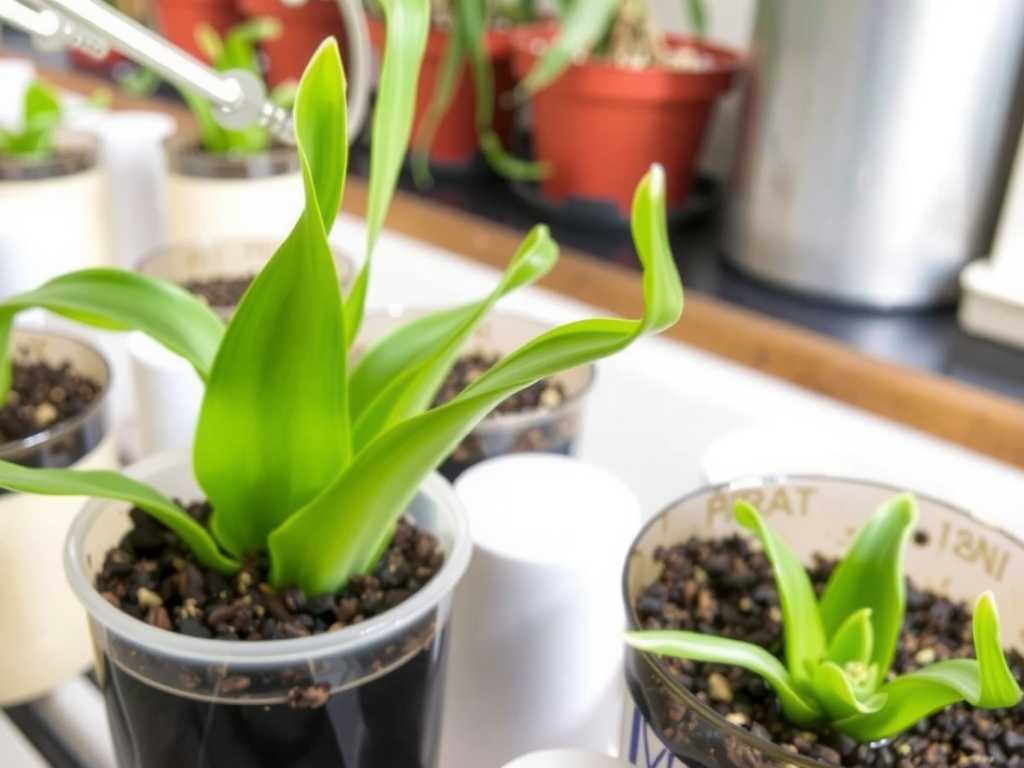
For those propagating in less-than-ideal room conditions, simple adjustment techniques are highly effective.
- To Warm Cool Water: If your water is slightly too cool, the safest method is to place the propagation vessel in a warmer spot in your home. Avoid adding hot water directly, as this creates harmful shocks and uneven temperatures. A more advanced solution for serious propagators is a small, submersible aquarium heater with a thermostat, set to 73°F. This is the ultimate tool for maintaining perfect hydroponic conditions.
- To Cool Warm Water: If water is too warm, move the vessel to a cooler, shaded area. You can also perform more frequent water changes with water that has been allowed to sit at room temperature. Never use ice cubes, as the sudden cold shock can damage tissues.
A key part of maintaining ideal water temperature for propagation is choosing the right vessel. Clear glass allows you to monitor root growth and water clarity, but it can also act as a magnifying lens if in direct sun, spiking the temperature. Ceramic or opaque containers insulate better against temperature swings. Always use room-temperature filtered or tap water that has been allowed to sit for 24 hours to dechlorinate when doing changes.
Integrating Temperature Control into Your Propagation Routine
Temperature control isn’t a one-time task; it’s integrated into every step of your care routine. Here is your actionable protocol for successful hydroponic snake plant propagation.
Start with the cutting itself. Use a sterile knife to make a clean cut. Allow the cutting to callus over for 1-2 days in a dry, shaded place. This step is vital—placing a fresh, wet cutting into water dramatically increases rot risk regardless of temperature.
Prepare your water. Fill your clean vessel with dechlorinated water at your target temperature of 72°F. Insert the callused cutting so that only the bottom 25% is submerged. More is not better; submerging the leaf base invites rot.
Placement is critical. Position your vessel in a location with bright, indirect light. Direct sunlight will overheat the water. Avoid drafty windowsills or spots near heating/AC vents, as these cause rapid temperature fluctuations.
Your maintenance schedule must account for temperature. Check the thermometer daily. Change the water completely every 7-10 days, or sooner if it looks cloudy. Each time, replenish with fresh, dechlorinated water that has been adjusted to your target 72°F-75°F range. This refreshes oxygen and removes any accumulating organic compounds.
Troubleshooting: Signs Your Water Temperature is Off
Your cuttings will communicate problems. Learn to read the signs.
- Yellowing or Mushy Stems: This is the classic sign of rot, often caused by water that is too warm, lacks oxygen, or where the cutting wasn’t callused. Check your temperature immediately.
- No Root Growth After 4-6 Weeks: While snake plants are slow, a complete lack of progress often points to water that is too cold, slowing metabolism to a standstill.
- Foul Odor or Cloudy Water: This indicates a bacterial bloom, heavily promoted by warm water temperatures. Change the water immediately, clean the vessel, and reassess your placement and temperature.
What is the fastest way to root a snake plant in water? While patience is key, the fastest rooting occurs when you combine all optimal conditions: a healthy cutting, a clean cut, a proper callusing period, and most importantly, maintaining water consistently within the 70°F-75°F (21°C-24°C) range. This warm, stable environment maximizes the plant's natural root-growing hormones.
Can I use a heat mat for propagating snake plant cuttings in water? Use extreme caution. Heat mats are designed for soil propagation and can easily overheat a small water vessel, pushing temperatures into the dangerous 80°F+ range. If your environment is very cold (below 65°F), you could place the vessel near a mild heat mat and monitor the water temperature diligently with a thermometer, but submersible aquarium heaters are a far safer and more precise tool for water propagation.
My cutting has roots but now the leaf is getting wrinkled. What’s wrong? Wrinkling indicates dehydration. While the cutting is growing roots, it is not yet efficient at drawing up enough water to support the entire leaf. This can be exacerbated if the water temperature is too high, increasing transpiration (water loss) from the leaf. Ensure temperatures are in the ideal range and consider providing a slightly more humid ambient environment. The plant will balance itself as the root system matures.
Propagating snake plants in water is a rewarding process that demystifies plant growth. By focusing on the fundamental science of water temperature, you move from hopeful guessing to confident cultivation. Monitoring with a simple thermometer, making thoughtful adjustments to your setup, and maintaining a consistent routine transform this passive waiting game into an active, successful practice. Provide that stable, warm foundation, and your cuttings will respond with the resilient growth these remarkable plants are known for.

发表评论